

Improving roadway safety takes more than identifying where crashes happen. It requires understanding the factors behind those crashes, determining where improvements can have the greatest impact, and bringing the right partners together to move solutions forward.
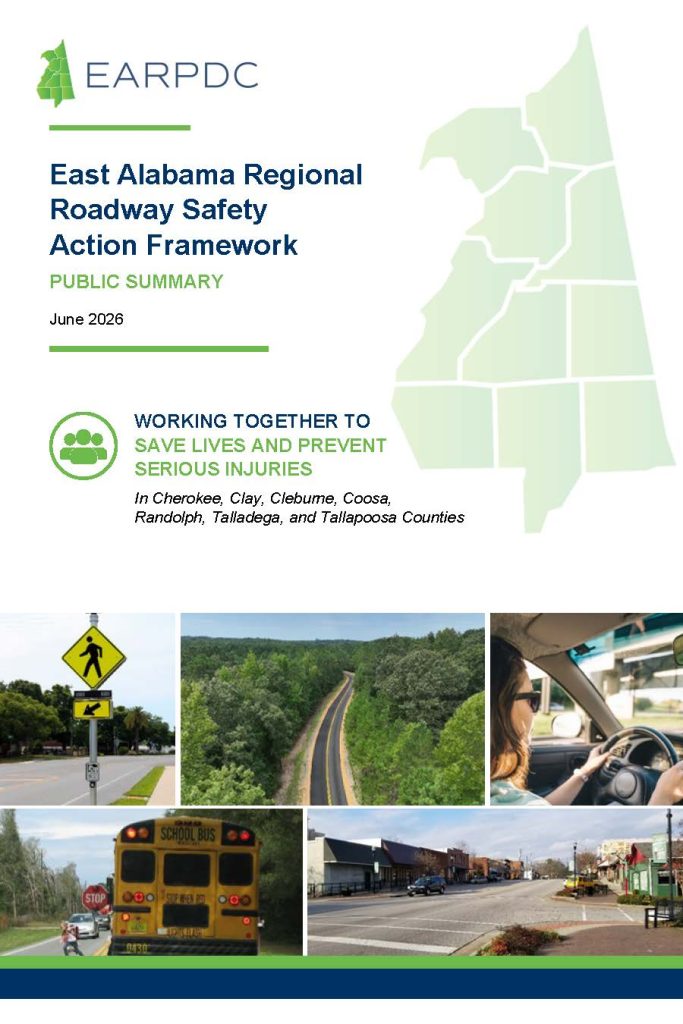
That was the focus of the East Alabama Regional Connectivity and Safety Study and the resulting East Alabama Regional Roadway Safety Action Framework. Sain Associates was proud to partner with the East Alabama Regional Planning and Development Commission (EARPDC) and the East Alabama Rural Planning Organization (EARPO) on this regional effort.
The framework was designed around a shared goal: working together to save lives and prevent serious injuries across Cherokee, Clay, Cleburne, Coosa, Randolph, Talladega, and Tallapoosa counties. It provides a data-driven foundation to help identify safety priorities and guide future improvements across the region.
This project recently received a 2026 Excellence in Regional Transportation Award from the National Association of Development Organizations (NADO). The award recognizes innovative regional transportation projects and reflects the strong collaboration and practical value behind this work.
Understanding Regional Roadway Safety Needs
Our work began by reviewing crash data across the seven-county study area to better understand where the greatest safety challenges were occurring and what factors were contributing to serious crashes. We partnered with Tim Barnett, P.E., PTOE, RSP, to analyze crash data and evaluate roadway safety conditions throughout the study area.
The findings helped identify common safety concerns across East Alabama, including challenges on rural roads, at intersections, at night, and along curves. This gave the project team a clearer picture of where communities could focus their efforts to make the greatest difference.
Turning Data into Action
Identifying where and why serious crashes occur is only the first step. The real value of this work comes from translating those findings into strategies communities can act on.
The framework takes a severity-first, systemic, and context-sensitive approach to roadway safety. Recommended countermeasures range from pavement markings, signage, and lighting to intersection and roadway improvements designed to address specific safety concerns. The goal is to help each community focus on solutions that fit its roads and priorities.
The framework also recognizes that improving roadway safety requires more than engineering alone. Meaningful progress depends on coordination among transportation agencies, local governments, law enforcement, emergency responders, community organizations, and other regional partners.
An important goal throughout the project was to create something communities could use after the study was complete. The framework helps counties establish safety priorities, identify potential improvements, and strengthen their ability to pursue future Local Road Safety Initiative grant funding.
A Regional Partnership
Roadway safety planning is most effective when technical expertise is paired with regional knowledge.
Throughout the project, Sain worked closely with EARPDC and EARPO staff, whose guidance helped shape the study and keep the framework focused on the needs of the region. The study and framework were also presented to local officials, committee members, and other regional partners, helping share the findings and potential strategies with those who can play a role in advancing roadway safety improvements.
This collaboration with EARPDC and EARPO was an important part of the project. We’re proud to have helped develop a practical resource that communities across East Alabama can use as they plan for safer roads and pursue future funding opportunities.
If your community is looking to improve roadway safety and prepare for future funding opportunities, contact us to learn how we can help.