
Today is National Nonprofit Day, a time to celebrate organizations that strengthen communities, improve lives, and create lasting change around the world. At Sain Associates, we understand that meaningful impact rarely happens alone. It takes people who are willing to see a need, develop a solution, and invest in something bigger than themselves. That’s why we’re proud to support organizations whose missions align with those values.
For me, that organization is Designs for Hope. I’ve had the privilege of serving on the Designs For Hope Board of Directors and watching its mission grow over the years, and I’m grateful that Sain Associates has been able to support its work.
As engineers, we are trained to look at difficult circumstances and ask an important question: How can we create a practical solution? We study the conditions, listen to the people affected, identify the obstacles, and develop a plan. Yet the most meaningful engineering work is never simply about infrastructure. It is about how that infrastructure serves people, strengthens communities, and creates opportunities for a better future.
Fourteen Years of Hope in Action
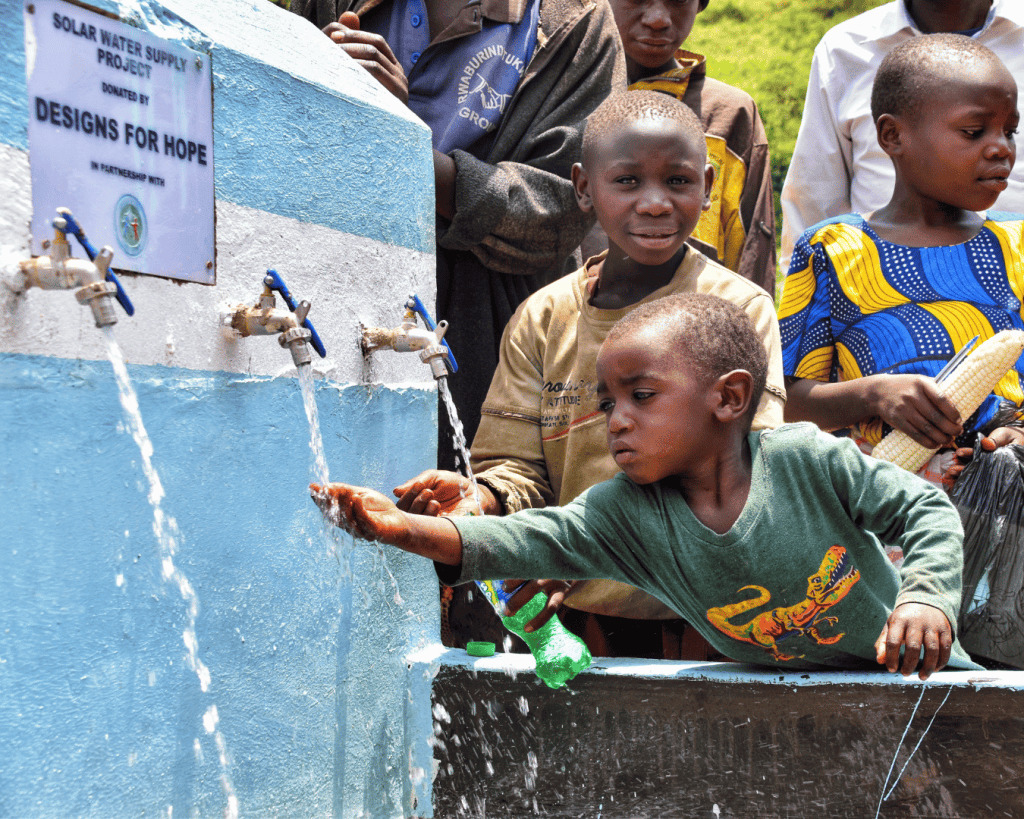
Designs For Hope began 14 years ago with a conviction that the hope of Jesus Christ should reach every person, in every place, through the local church. Since then, the ministry has served more than 730,000 people through clean-water projects, pastor training, care for widows and orphans, church planting, compassion ministries, and Gospel outreach in some of the world’s most underserved communities.
Its work reflects an approach that resonates strongly with the engineering profession: understand the true need, create an appropriate solution, and equip local leaders to sustain the impact.
Designs For Hope works alongside churches and communities to identify physical barriers, develop practical engineering solutions, and help implement and evaluate projects. These efforts include clean-water wells, filtration systems, solar-energy projects, and other infrastructure that supports both immediate needs and long-term ministry. However, the ministry’s greatest impact is not measured only by wells drilled, systems installed, or buildings constructed. It is measured in people.
When “Impossible” Becomes a Design Challenge
One story from Designs For Hope’s anniversary reflection illustrates that mission especially well. Several years ago, the organization trained approximately 100 pastors in rural Uganda and gave each of them a water filter to use in his home and church. About a month later, one of those pastors, John Maitland, traveled to a remote island in the middle of a lake where nearly 7,000 people lived.
Reaching the community required hours of driving followed by an hour in a small, hand-carved boat. When John arrived, he saw children drinking directly from the lake. It was the same water used for bathing and washing, while cattle and human waste flowed into the water supply.
John could have concluded that the situation was beyond his ability to change. Instead, he remembered what he had learned and asked:
“How can we bring clean water and the hope of the Gospel to the people of Tisai Island?”
Others had attempted to solve the island’s water problem. Government officials and private individuals had invested significant resources, but the prevailing conclusion was that providing reliable clean water there could not be done.
Designs For Hope, John, and their partners approached the challenge differently. They listened, evaluated the conditions, designed a solution, and developed a plan. Through their combined efforts, four clean-water wells were drilled on the island. For the first time in its history, the community had access to clean water close to home. That is engineering at its most meaningful: applying knowledge, creativity, perseverance, and partnership to improve people’s daily lives.
More Than a Project
At Sain Associates, we often say that our work is about more than plans on paper. Whether we are designing a safer roadway, improving access to a community, preparing a site for new investment, mapping critical infrastructure, or solving a drainage problem, the ultimate purpose is to serve people.
The same principle is evident in Designs For Hope’s ministry. The wells on Tisai Island met an urgent physical need, but the story did not end when construction was completed. John continued serving his community, encouraging other pastors, and growing as a respected leader whose influence has spread throughout the region.
Designs For Hope did not simply deliver a project. It equipped a person who was already invested in his community and gave him the knowledge and resources to lead. That emphasis on strengthening local leadership is what makes the organization’s work both sustainable and transformative.
Continuing to Build
An anniversary is an opportunity to celebrate, but it is also a reminder that the work is not finished. Millions of people still lack access to clean water. Pastors around the world continue serving with limited training and resources. Churches are working faithfully to meet physical and spiritual needs in communities that are often overlooked.
Designs For Hope continues to respond by combining technical knowledge with local relationships and a commitment to the Gospel. As we reflect on National Nonprofit Day, we’re reminded that organizations like Designs For Hope demonstrate what is possible when compassion, expertise, and faith come together in service to others.
At Sain Associates, we are honored to support an organization that demonstrates how professional skills can be used for an eternal purpose. The work of Designs For Hope reminds us that God can use engineers, pastors, donors, churches, volunteers, and community leaders—each contributing their unique talents—to accomplish something no one could accomplish alone.
A well is an engineered structure. Clean water is a basic necessity. But when thoughtful design is paired with faith, compassion, and committed local leadership, the result is much greater than infrastructure. It becomes hope in action.