
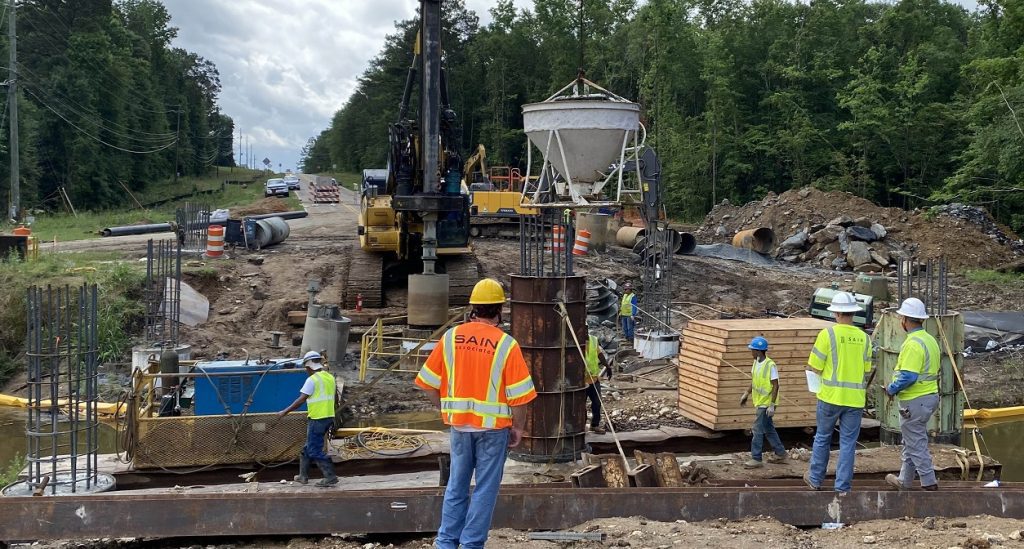
As spring construction season gets underway, orange barrels, lane shifts, and work crews become a familiar sight on roadways across the Southeast. National Work Zone Awareness Week is an important reminder for all of us to slow down, stay alert, and do our part to protect the people working just feet away from moving traffic. This year’s theme, “Safe Actions Save Lives,” feels especially timely.
At Sain Associates, work zone safety is something our team thinks about every day. With projects spanning Alabama, Tennessee, and the Southeast, we see firsthand the work that goes into enhancing roads and infrastructure, and we know it is the people behind that work who make the improvements possible.
In 2026, the conversation around work zone safety has taken on an added urgency, particularly in Alabama. Earlier this month, the Alabama Legislature passed the Alabama Work Zone Safety Act (and Gov. Kay Ivey is expected to sign it), creating a two-year pilot program that will use automated speed enforcement cameras in designated construction zones. The legislation comes in response to ongoing safety concerns and the number of fatalities reported in work zones in recent years.
Under the pilot program, drivers traveling 10 miles per hour or more above the posted speed limit in a marked work zone may be subject to a civil fine of up to $250. The goal is to encourage drivers to slow down and help protect roadway workers as construction activity continues to increase across the region.
According to the National Safety Council, 898 people were killed, and 40,170 were injured in work zone crashes nationwide in 2023. Those numbers are a sobering reminder that these spaces deserve our full attention. Drive Safe Alabama also reports that many work zone crashes are rear-end collisions, often linked to speeding or distracted driving, which is why slowing down and staying focused matters so much.
Behind every lane closure or traffic shift, crews are working to make our roads safer and stronger for the communities we serve. For drivers, that means being prepared for sudden merges, narrowed lanes, flaggers, and changing traffic patterns.
Taking a little extra time and staying focused can make a real difference. Simple actions like slowing down in posted work zones, putting the phone away, watching for flaggers and lane shifts, and allowing extra distance between vehicles all go a long way in keeping everyone safe.
As we build upon the momentum and awareness of work zone safety, we are reminded that the men and women working in these zones are the ones who help build and maintain the infrastructure our communities rely on every day, and their safety should never be taken for granted.