
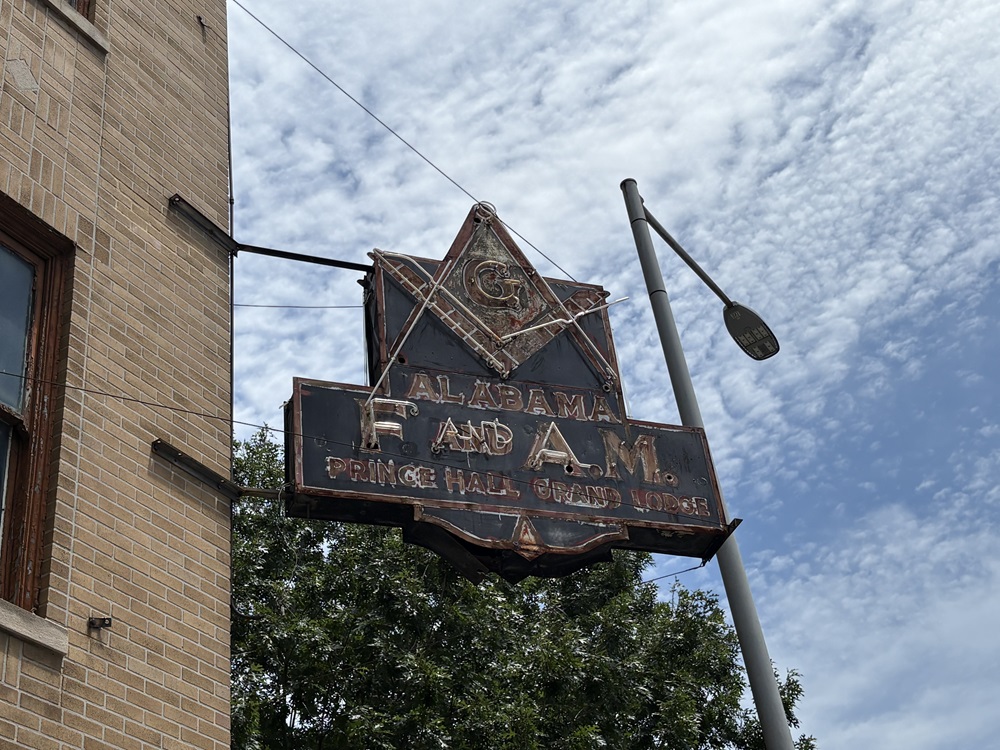
I had passed by the granite building at the corner of 4th Avenue North and 17th Street North countless times, never giving it more than a glance. Like many older buildings in downtown Birmingham, it appeared worn and forgotten, blending into the streetscape. I had never noticed the fluorescent metal signage or the Masonic symbols etched into the building. I certainly didn’t realize how deeply this structure was woven into Birmingham’s Civil Rights legacy.
That changed when I learned that ULI Alabama, the Historic District Developers (HDD) LLC, and the Most Worshipful Prince Hall Grand Lodge F. & A. M. of Alabama would be hosting a Birmingham Historic Preservation Summit focusing on the ongoing restoration efforts of the Masonic Temple. As I began researching the building’s history, I found myself fascinated by what it represented.
Sitting within the National Parks Service’s Birmingham Civil Rights Monument, the Masonic Temple was once a vibrant hub for Birmingham’s African American community. It was designed by Robert R. Taylor—the first Black student to graduate from MIT—and completed in 1924, debt-free, at a cost of $658,000. For a time, it was the tallest building in the city.
The Temple housed the Booker T. Washington Library, Birmingham’s first lending library open to Black citizens. It featured professional offices and a 2,000-seat auditorium that welcomed legendary performers like Duke Ellington, Louis Armstrong, and Cab Calloway. In 1932, the building served as the site of Birmingham’s first major civil rights gathering, following the infamous Scottsboro Boys trial.
The Birmingham Historic Preservation Summit took place at the newly restored Carver Theatre and featured compelling presentations on the Masonic Temple’s history, a panel on the role of historic preservation in the city, and a fireside chat with Brent Leggs, Executive Director of the African American Cultural Heritage Action Fund and Senior Vice President of the National Trust for Historic Preservation.
As the event unfolded, anticipation built for the final segment of the day: a guided tour of the Masonic Temple.
Walking through the doors of the Temple, I was immediately struck by the integrity of the structure. Despite years of vacancy, the building remained remarkably intact. Inside the grand ballroom, I found myself picturing the magic of the past—imagining Cab Calloway belting out “Minnie the Moocher” or Louis Armstrong dazzling the audience with a trumpet solo from the balcony. Each floor revealed new marvels such as hand-painted office numbers, intricate carvings, and finely crafted woodwork. It was like stepping into a time capsule, rich with cultural significance and architectural beauty.
As the tour concluded and we exited onto the street, I felt a renewed appreciation for the importance of this restoration effort. The revitalization of the Masonic Temple offers more than historical preservation—it presents a meaningful opportunity to stimulate economic growth in the Historic District and reawaken a cornerstone of community pride. Irvin Henderson of HDD captured the moment perfectly when he said:
“When we invest in preserving these historically significant spaces, we’re investing in the economic vitality of our communities and honoring the legacy that makes Birmingham unique.”